Matt Lamont’s extraordinary archive of 10,000+ printed design artefacts is heading into book form — and it deserves your attention.
If you’ve spent any time in the world of graphic design, you’ll know how fragile its history can be. Magazines go out of print. Posters get lost. The work of whole movements disappears into boxes. Matt Lamont — designer, collector, and educator based in Bradford — has spent over a decade fighting that entropy, assembling one of the most comprehensive private graphic design archives in the country.
Now, in partnership with Unit Editions, he’s bringing the best of it into a single book. Design Reviewed is currently crowdfunding on Volume, and it looks seriously special.
What is Design Reviewed?
The Design Reviewed website has been quietly building for years — a digital archive cataloguing everything from rare typographic periodicals like Typographische Monatsblätter and Typografia to posters, stamps and ephemera from across the globe. Every item in the archive also has a physical presence in Matt’s Bradford studio, where it’s actively used for educational workshops, visiting lectures and as a wellspring of inspiration for working designers.
The planned book spans a century of graphic design history, from Art Nouveau and Early Modernism through to Pop and Post Modernism. Crucially, the selection isn’t driven by personal taste alone — it’s chosen to illuminate wider historical movements, ideas and approaches within the discipline.
The Book
At 400 pages, hardback, 279 × 234mm, and published by Unit Editions — whose track record for beautifully produced design books speaks for itself — this looks like a genuinely serious publication. Not a coffee table novelty, but a study tool and reference work you’d actually return to. Foil typography details round out what sounds like a production to match the quality of the content.
“I hope the book can be a celebration of visual reference, a study tool and a way of bringing the archive out of the boxes and shelves and into your hands. Something you can return to again and again for inspiration and context.” — Matt Lamont
The Collector’s Edition
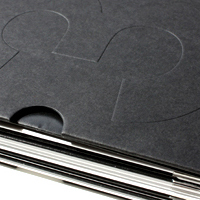
There’s also a Collector’s Edition housed in a shoulder-neck slipcase, with a cut-back front board that reveals the contents page, a nice touch. It comes with a full A-Z postcard set (26 cards, each featuring a letterform from the archive with designer credits on the reverse) and an exclusive A2 folded poster. Limited to 250 copies.
The campaign is 76% funded with a deadline of 29 April 2026. Estimated delivery is Summer 2027. Worth backing now if you’re interested — the Collector’s Edition in particular won’t hang around.
The Designers Republic, led by founder and born rebel Ian Anderson, has shaped graphic communication over the past 30 years. It has done this through gravity-defying client work, revolutionary self-initiated projects, and provocative gestures.
Under Anderson’s idiosyncratic leadership, TDR™ pioneered the idea of a design group with attitude. More like a band than a design studio, they changed the dynamic between client and design group, and uniquely, they acquired a following beyond the graphic design tribe.
Now, for the first time in book form, Ian Anderson explores his studio’s output, its concepts, its processes and its influence on a generation of graphic designers.
Dismissed by some as “stylists”, Anderson demonstrates how the work of TDR™ is underpinned by conceptual thinking. The book delivers a unique insight into why TDR™ work looks the way it does, and provides a guide to the studio’s modus operandi.
I was lucky enough to grab a bundle from KickStarter and have my name featured in the book!
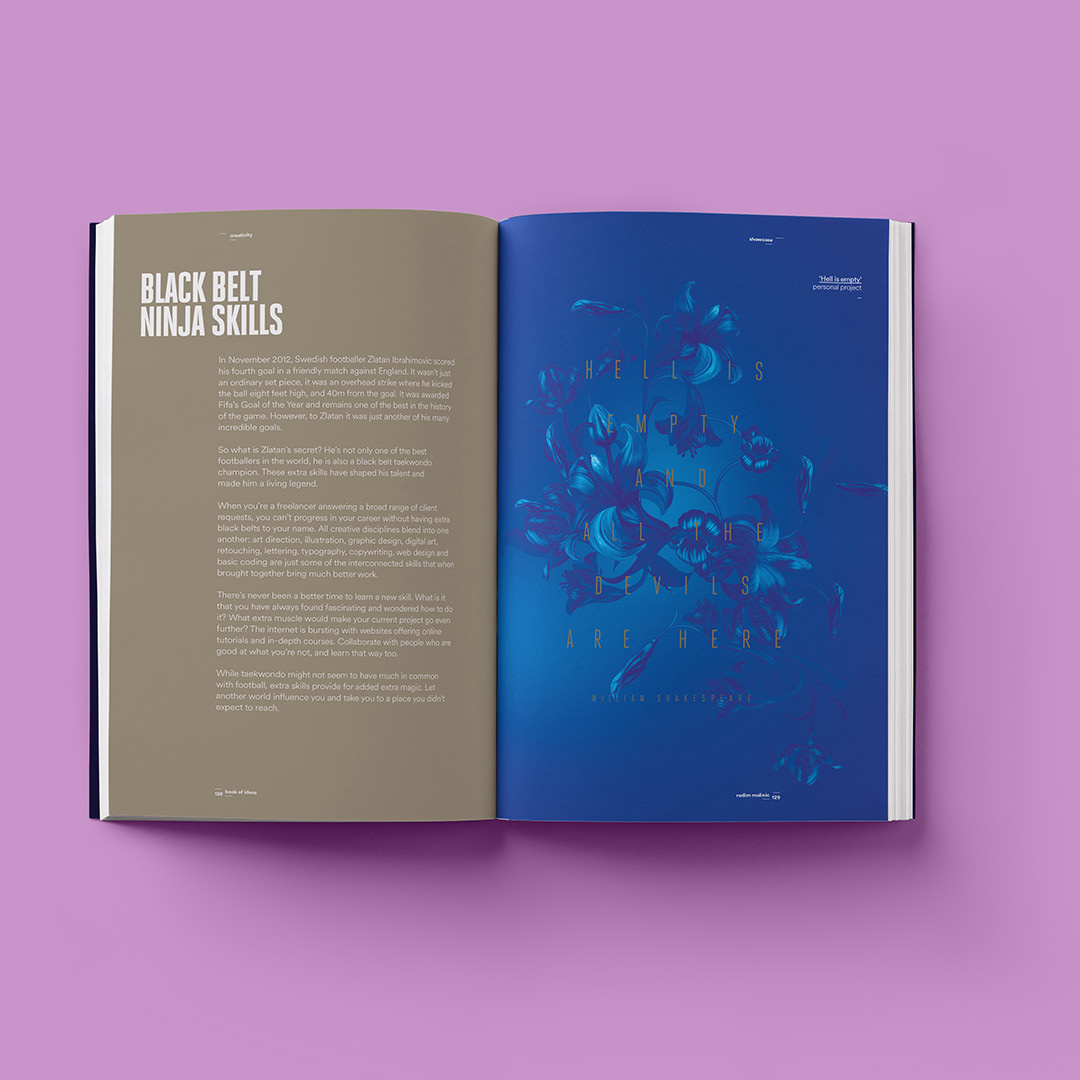
This is a journal of creative direction and graphic design; a collection of thoughts, musings and observations from Radim Malinic’s ups and downs in the creative industry.
It’s about how the world outside influences the creativity inside; and how it inspires us, teaches us and makes us create better work.
Find out more about the book here, or grab your copy from Amazon.
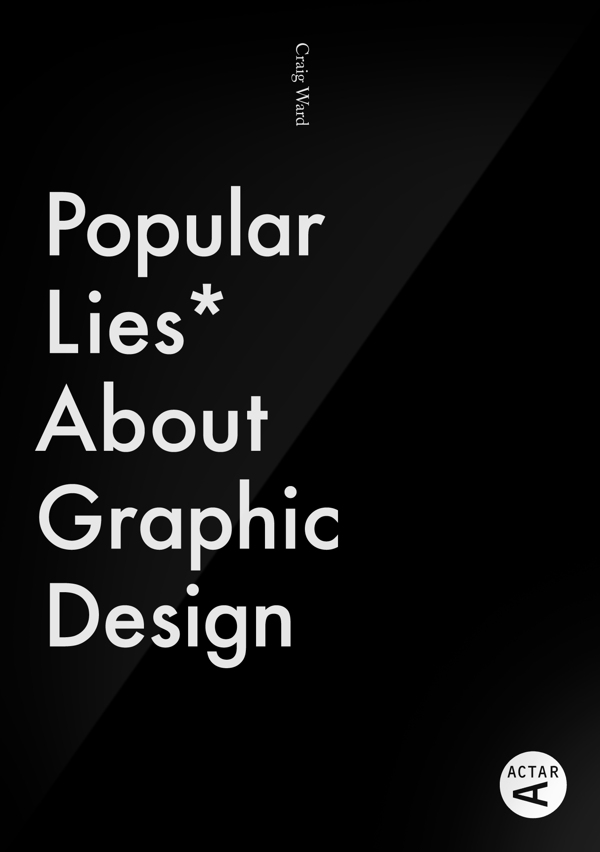
Multi award-winning designer, typographer and TED speaker, Craig Ward, presents his first self-authored book – Popular Lies About Graphic Design. An attempt to debunk the various misconceptions, half truths and, in some cases, outright lies which permeate the industry of design.
Lovingly designed and written both passionately and irreverently, Ward pulls from his ten years of experience to tackle lighter subjects such as design fetishists, Helvetica’s neutrality and urgent briefs, alongside discussions on more worthy topics such as the validity of design education, the supposed death of print, client relationships and pitch planning. In addition, the book features contributions and insights from more than a dozen other established practitioners such as Milton Glaser, Stefan Sagmeister, Christoph Niemann and David Carson making it a must for students, recent graduates and seasoned practitioners alike.
I was pleased to get my hands on a ltd edition packaged copy of Herb Lubalin – American Graphic Designer 1918—81.
A monograph of the legendary Herb Lubalin, one of the foremost graphic designers of the 20th century. Along with Saul Bass and Paul Rand, Herb Lubalin forms a trio of American graphic design greatness.
This meticulously researched book offers a complete career overview of Herb Lubalin, beginning with his early days as one of the original Mad Men in the New York advertising world of the 50s and 60s, and continuing into the years of his greatest achievements as one of the world’s most influential typographers and graphic designers.
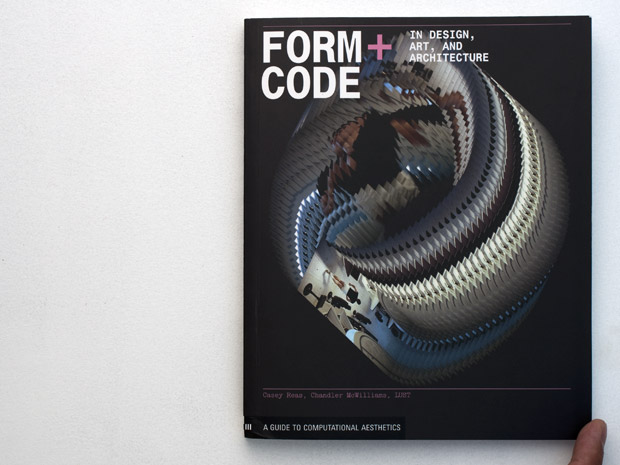
Once the exclusive domain of programmers, code is now being used by a new generation of designers, artists, and architects eager to explore how software can enable innovative ways of generating form and translating ideas. Form+Code in Design, Art, and Architecture offers an in-depth look at the use of software in a wide range of creative disciplines. This visually stimulating survey introduces readers to over 250 significant works and undertakings of the past 60 years in the fields of fine and applied art, architecture, industrial design, digital fabrication, visual cinema, photography, typography, interactive media, gaming, artificial intelligence (AI), artificial life (a-life), and graphic design, including data mapping and visualizations, and all forms of new media and expression.
Memories welcomes on board Nitzan. A NYC based designer specializing in identity design, brand application and art direction for the music industry. Collaborations include galleries, media start-ups and other designers on both promotional and self-initiated projects.
Here’s a nice story. Memories contributor Simon Spilsbury told fellow illustrator/designer Patrick Walker that he was doing an image for Memories, and shortly afterwards we got an email from Patrick asking to get involved. His studio, Dust, do some amazing work in illustration and print design so we really wanted to get them on board. Luckily, we had a story slot for them and we sent off a brief. So we’re welcoming Patrick, Pamela and Alun at Dust to the project. Can’t wait to see what they come up with. Please check out their website here.
Memories welcomes Si Billam, founder and art director of UNIT.
UNIT is the collective and collaborative work of UK designers Si Billam and James Sanderson. Working globally across music, fashion, lifestyle and youth culture.
Working with clients such as: Human Studio, Universal Everything, Pollinate Records, Carbon Logic Publishing, Computer Arts, MTV Italy, Coca Cola USA, Urban Splash and EA Games.
This is a rare chance to feast your eyes on a memories submission as we are holding back the majority of artwork for the book.
The submission was inspired by a personal memory found in my story. It is amazing to see the project coming together and how individual artists portray each story in print. This piece sums up my story with huge visual impact. I love it!
The design duo Simon Dovar and Nils Davey are Binary & The Brain, and they’ve thrown their weight behind Memories project. Formerly Jawa & Midwich, they do all kinds of design work including book covers and music packaging, as well as online work. The image you see here is from their self-initiated poster range. Another interesting thing about them is that their studio is trans-Atlantic and transcontinental. Simon is based in London and Nils in Los Angeles. We’ve asked them to create an image for a story called The Fox Cubs by leukaemia survivor Sarah Yates. Our thanks go out to Binary & The Brain. Please take a look at their website here.
3 Minutes is the second publication from non-profit organisation Designers Against Human Rights Abuse (DAHRA) and the second collaboration between DAHRA and Tibet Relief Fund.
The premise of the book is to show the full extent of the Tibetan conflict through 10 diverse and extremely powerful 3-minute interviews, each describing the 3 minutes that changed their lives. This idea is reflected in the covers of each booklet, which separately make beautiful abstract covers but together form to make a ”3″.
Contributors were asked to translate these 3 minute interviews into 16 printed page booklets using primarily typography. The result is a book made up of 10 beautifully designed booklets from some of the world’s best designers showcasing considered and stunning typography.
The book is available for £10 + p&p worldwide with all proceeds going to Tibet Relief Fund and being distributed by Subism
The contributors to this project are Bibliotheque, Brighten the Corners, Stefan Gandl (NeubauBerlin), Alex Haigh (Thinkdust / HypeforType), Nick Hard (Research Studios), Jeff Knowles (Research Studios), Abbott Miller (Pentagram), Si Scott, Paul Skerm, Un.titled
DAHRA are also currently having their first major exhibition in London, so those of you who live or will be in the area at the time are invited to drop by. See below for more information: